A complete bathroom lighting guide: types of light, ideal colour temperature and practical tips for lighting this special part of the home with efficiency and modern, functional design.
Bathroom lighting has evolved from a simple functional requirement into a key element of contemporary interior design. Today, the bathroom is a wellness space, a personal refuge where light defines sensations, enhances materials and turns everyday routines into experiences.
Lighting a bathroom well isn't a matter of "more light" but of designing a smart system that combines functionality, energy efficiency and design. In this article, we'll guide you step by step to understand how to light each area of the bathroom, what types of light to use, which colour temperature to choose and which technical requirements are essential for a professional result.
Why is bathroom lighting so important?
The bathroom is a multifunctional space where precision tasks combine with moments of relaxation. Lighting must adapt to both needs, and do so safely, especially in wet areas such as the bathtub or shower.
Proper lighting:
Increases safety in slippery areas such as the shower or bathtub.
Avoids unflattering shadows on the face while grooming.
Improves the perception of space, which is key in small bathrooms.
Highlights materials such as ceramics, marble or microcement.
Lets you create atmospheres: from energising light in the morning to warm, relaxing light at night.
Optimises energy consumption through efficient luminaires.
Poor bathroom lighting can create dark areas, a sense of coldness or even insecurity. A well-lit bathroom, by contrast, can turn into a true wellness space within the home.
Types of bathroom lighting and how to combine them
Bathroom lighting should be understood as a system made up of different layers working together to create a balanced, functional, visually coherent space.Each type of light serves a specific purpose and, when correctly combined, they deliver a comfortable, safe, aesthetically appealing bathroom.
Below, we detail the main types of lighting and how to integrate them effectively.
Ambient light
Ambient light is the foundation of the bathroom's lighting design. Its role is to provide uniform lighting that lets you find your way and carry out everyday activities comfortably. To achieve this, recessed downlights, ceiling fixtures or linear luminaires with good diffusion are typically used. The key is to avoid harsh shadows and make sure the light reaches the whole room evenly.
Ambient light should be powerful enough to light the space, but without being excessive or glaring. The recommended colour temperature usually sits between 3000 K and 4000 K, depending on the bathroom's style and the atmosphere you want to create. In large bathrooms, it is advisable to distribute several light points to avoid dark areas and improve the perception of the space.
Task lighting
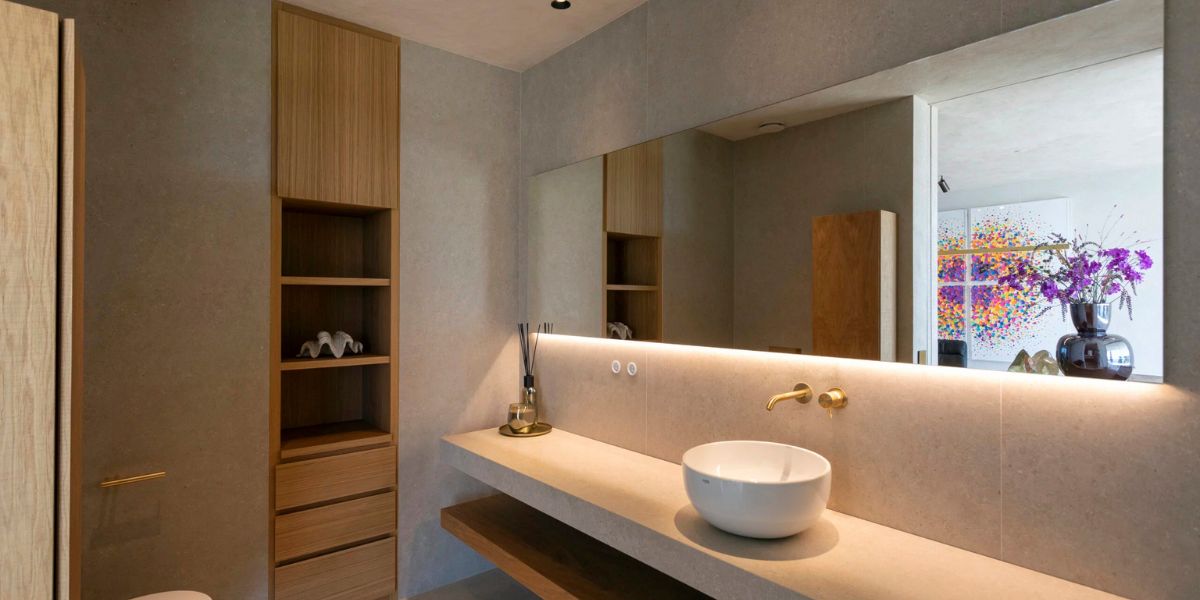
Task lighting is the lighting devoted to specific tasks that require greater precision. In the bathroom, its most common use is at the basin area, where it is essential to avoid shadows on the face and ensure clear, sharp lighting. Side wall lights, front-facing fixtures or backlit mirrors are used with a high CRI (Colour Rendering Index) that reproduces colours faithfully.
This type of lighting should be more focused and controlled than ambient light, but without producing glare. Its role is to complement the base lighting and bring clarity to areas where more detail is needed.
Ambient or decorative light
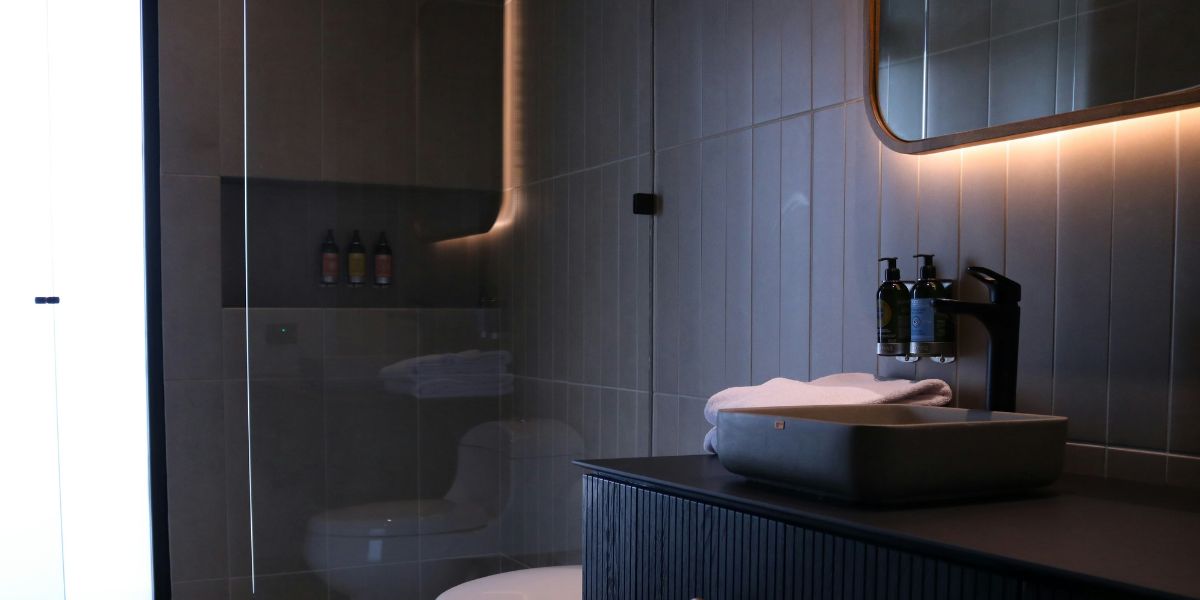
Ambient light is the one that brings warmth, depth and character to the bathroom. It isn't intended for functional lighting, but to create atmospheres and improve the experience of the space. It can be achieved through hidden LED strips, indirect lighting in mouldings, recessed profiles or decorative wall lights that add a distinctive touch.
This type of light is especially useful for creating relaxing atmospheres, softening contrasts and enhancing architectural or decorative elements. It also allows the perception of the bathroom to be modulated, making it cosier and more sophisticated.
Natural light (if there is a window)
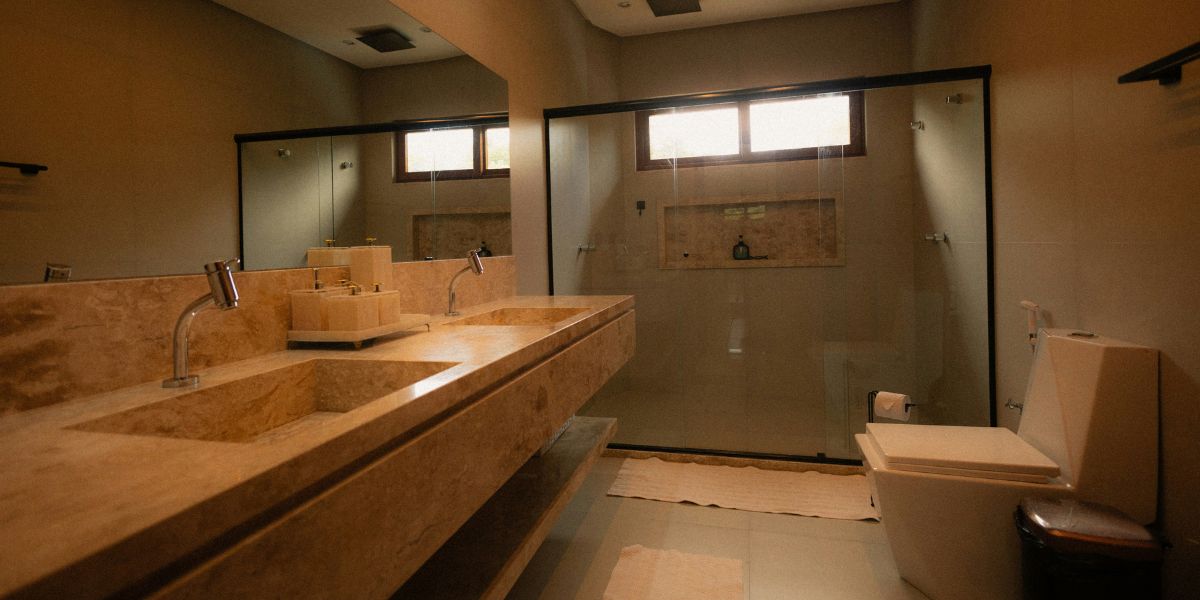
Natural light is a valuable resource in any bathroom. It brings freshness, realism in colours and a sense of spaciousness hard to achieve with artificial light alone. If the bathroom has a window, it's important to make the most of it, avoiding obstructions and choosing materials that reflect light well.
However, natural light varies throughout the day, so it should always be complemented with artificial lighting that maintains tonal coherence and ensures adequate lighting at any time.
natural lighting
How to light each area of the bathroom
Bathroom lighting must adapt to the specific needs of each area, as each zone serves different functions and requires its own lighting treatment. A good design combines technical precision, visual comfort and aesthetic coherence, ensuring that all parts of the bathroom work in harmony.
Below, we go on to detail how to properly light the main areas to obtain a balanced, functional, visually appealing space.
Basin area
The basin is where precision tasks take place, so it needs clear, uniform, shadow-free lighting. The key is to avoid direct overhead light on the face, since it creates unflattering shadows. The ideal is to combine frontal and side lighting through vertical wall lights on either side of the mirror or linear luminaires with a diffuser.
A high CRI is essential for correctly reproducing skin tones and the colours of cosmetic products. The recommended colour temperature usually sits between 3000 K and 4000 K, depending on the bathroom's style and the desired effect.
Shower or bathtub area
The shower is the emotional heart of the modern bathroom. Its lighting must be safe, functional and able to create immersive atmospheres.
1. Adequate IP rating
In the shower, the luminaire must be IP65 or higher. This guarantees resistance to water and constant humidity.
2. Task lighting for visibility and safety
A recessed downlight centred over the shower is the most common solution. In larger showers, two light points avoid shadows and create a more uniform effect.
3. Ambient light for a spa effect
Hidden LED strips in alcoves, niches or recessed profiles are a trend. They light without dazzling and bring a sense of depth and calm. In showers with textured claddings, grazing light highlights the veins and reliefs.
4. Ideal colour temperature
For the shower, the most advisable is light between 3000 K and 3500 K. It is warm, relaxing and supports a sense of well-being. If you want a fresher, more energising atmosphere, 4000 K also works.
5. Recommended lumens
300 to 500 lumens per light point is usually enough. In larger showers or those with dark claddings, the intensity may need to be increased.
6. Scenic effects
Indirect light on the ceiling for an immersive effect.
Lower lighting to create a soft halo on the floor.
RGB lighting for wellness showers (always with equipment suitable for wet areas).
Toilet area
The toilet area doesn't require intense lighting, but it does need a comfortable, discreet light that allows for glare-free use. A small task light or indirect lighting integrated into the furniture or the lower part of the wall can deliver a soft, pleasant atmosphere.
This type of lighting also works very well as a night light, since it allows you to find your way without turning on all the bathroom's ambient lighting. The key is to keep a low light level and a warm or softly neutral colour temperature to support visual comfort.
bathroom lighting
Walking / general area
The walking area is the one that articulates the bathroom and connects every area. Here the lighting should be homogeneous, balanced and free of harsh shadows. Recessed downlights or ceiling fixtures with good diffusion are common choices, always distributed strategically to cover the whole surface without creating excessive contrasts.
How to combine them effectively
The key to a well-lit bathroom lies in the balanced combination of these light layers. Ambient light sets the base, task lighting brings precision where it's needed and ambient/decorative light adds depth and comfort. Natural light, when present, acts as a complement that enriches the whole.
A good combination should:
Avoid excessive contrasts between zones.
Maintain a consistent colour temperature across all luminaires.
Integrate task lighting without breaking the visual harmony of the space.
Use ambient light to soften the atmosphere and bring character.
Ensure energy efficiency through quality LED luminaires.
When these layers are properly integrated, the bathroom becomes a balanced, functional and aesthetically impeccable space.
Which type of light to choose by bathroom size
The bathroom's size decisively shapes the lighting strategy. It determines not only the amount of light needed but also the type of luminaires, their distribution and the way the different layers of light are combined.
A well-lit bathroom doesn't depend solely on wattage, but on a smart design that makes use of the space, improves visual perception and ensures energy efficiency.
Small bathrooms
In small bathrooms, lighting must work in favour of visual spaciousness. The aim is to avoid shadows, minimise contrasts and create a sense of continuity that makes the space feel bigger and more open.
Key recommendations:
Prioritise uniform ambient light: a single well-sized light point or two small downlights can be enough to light the whole space without saturating it.
Avoid bulky luminaires: recessed or low-profile fixtures help maintain a clean, light aesthetic.
Take advantage of reflective surfaces: backlit mirrors, light claddings and satin finishes help multiply the light.
Integrate discreet ambient light: a hidden LED strip under the cabinet or in a small niche adds depth without overloading.
Maintain a consistent colour temperature: between 3000 K and 3500 K for a balanced, pleasant atmosphere.
In small bathrooms, the key is to light without overwhelming, creating a functional and visually larger space.
Large bathrooms
Spacious bathrooms allow for a more elaborate lighting design, with several layers of light working together to create a sophisticated, comfortable, well-structured atmosphere. Here lighting plays not only a practical role but also an aesthetic and architectural one.
Key recommendations:
Distribute several ambient light points: this avoids dark areas and ensures homogeneous lighting throughout the room.
Combine task lighting and ambient light: each area of the bathroom can have its own specific lighting, which allows for differentiated scenes and atmospheres.
Make use of indirect lighting: mouldings, recessed profiles or LED strips in strategic locations add depth and a contemporary design touch.
Use dimmers: they let you adapt the lighting to the time of day or type of activity, improving comfort and efficiency.
Choose luminaires with a good CRI: in large spaces, materials and colours take centre stage, so faithful colour rendering is essential.
large bathroom lighting
Ideal colour temperature for the bathroom
Colour temperature is one of the most decisive factors in how the bathroom is perceived. It influences not only how we see colours and materials but also how we feel within the space.
Choosing the right temperature lets you create a balanced, functional atmosphere consistent with the interior design, avoiding sensations that are too cold or too warm.
Colour temperature is measured in Kelvin (K) and defines whether a light is warmer, neutral or cooler. In the bathroom, where precision tasks coexist with moments of relaxation, finding a middle ground that delivers clarity without losing visual comfort is essential.
Between 2700 K and 3000 K we find a warm, soft, welcoming light. This range is ideal for those who want a bathroom with a relaxing, intimate, immersive atmosphere. It supports a sense of well-being and pairs especially well with natural materials such as wood, stone or earth-toned ceramics. It can, however, feel a little too warm for tasks requiring greater visual precision.
Between 3000 K and 3500 K sits what is known as warm neutral light, probably the most balanced option for most bathrooms. It offers a clear, pleasant light, precise enough for daily use, without losing warmth. This range works very well in contemporary bathrooms, minimalist ones or those with neutral-toned finishes, since it brings naturalness and more faithful colour rendering.
Around 4000 K we find a more technical neutral light, well suited to those who prioritise clarity and definition. This kind of light reproduces colours with greater fidelity.
The key is to maintain tonal coherence throughout the bathroom. Mixing very different temperatures can create an uncomfortable visual effect and break the harmony of the space. For this reason, the most advisable is to choose a main range, usually between 3000 K and 3500 K, and keep it across most luminaires, complementing it with warmer ambient light if you want to add depth or a decorative touch.
A well-chosen colour temperature not only improves the bathroom's functionality but also enhances its design, highlights the materials and helps create a balanced, pleasant atmosphere day to day.
Tips for bathroom lighting
Bathroom lighting must be planned with precision, as it is a space where functional tasks, personal care moments and aesthetic needs all coexist.
A good lighting design not only improves comfort and safety, but also transforms the perception of the space, highlights the materials and contributes to energy efficiency.
These general tips will help you create a balanced, modern, visually coherent bathroom.
Combine different layers of light
The key to a well-lit bathroom is to integrate ambient, task and accent light. Each one plays a distinct role and, together, they create a more versatile, comfortable space. Avoid relying on a single light point, as it creates shadows and limits functionality.
Bet on energy efficiency
Quality LED luminaires offer reduced consumption, greater durability and better light stability. They also generate less heat and require less maintenance. Choosing efficient products doesn't only cut the energy bill — it also improves the project's sustainability.
Avoid glare
The bathroom should be a comfortable space for the eyes. Choose luminaires with diffusers, well-designed optics or recessed systems that soften the light. Glare causes discomfort and detracts from the atmosphere.
Use dimmers
Dimmers let you adapt the lighting to the time of day or the activity: more intense light for precision tasks and softer light for relaxation moments. This versatility improves the user experience and optimises consumption.
Highlight architectural elements
Lighting isn't only for seeing — it's also for highlighting. LED profiles in mouldings, indirect lighting in furniture or grazing light on textured walls add depth and character to the bathroom, making it a more sophisticated space.
6. Make use of natural light when available
If the bathroom has a window, it is important not to block the entry of natural light. It brings freshness, realism and an unmatched sense of spaciousness. Complementing it with consistent artificial light ensures a balanced atmosphere throughout the day.
7. Choose luminaires suited to the humidity level
Even if not in direct contact with water, the bathroom is a humid space. It is advisable to opt for luminaires with adequate protection (IP44 or higher) to guarantee safety and durability.
8. Think about maintenance and durability
Choose luminaires from trustworthy brands, with good materials and accessible installation systems. A well-lit bathroom should also be easy to maintain and stand the test of time.
simon 860
Lighting with intent transforms the bathroom — and Simon raises that design to the next level
Bathroom lighting is not a mere accessory: it is an architectural element able to define sensations, improve functionality and enhance every detail of the space.
A well-lit bathroom combines technique, aesthetics and efficiency, integrating ambient, task and accent light to create a balanced, comfortable, visually coherent setting.
Choosing the right colour temperature, opting for luminaires with a high CRI and ensuring a smart distribution of light are decisions that make the difference between a correct bathroom and an exceptional one.
In this process, having reliable, quality solutions is essential. Simon's offerings, such as the waterproof downlights of the Simon 860 series or its high-efficiency LED systems, deliver the perfect combination of design, durability and lighting performance. They are products designed to fit into contemporary projects, deliver visual comfort and ensure precise, stable lighting over time.
Because lighting well isn't only seeing better: it's transforming the bathroom experience, enhancing its design and lifting it to a higher level. And doing so with Simon means betting on technology, safety and an aesthetic that makes the difference.
)