Charging points for an electric car are essential in the context of promoting this type of sustainable mobility.Do you know how they should be installed? Although there are more and more public charging stations for filling these vehicles' batteries, having your own charging point is convenient. Whether at your home, in a shared building or at the parking area of your company. Below we go through everything you should bear in mind for the placement of the charging structure in these spaces.
How to install an electric car charging point step by step
14 min read
)
Discover how to install an electric car charging point at home or at the office: types, costs, steps and available grants.
To install a charging point for your electric car in Spain, the first thing is to decide where the charger will be located, whether in a private garage or in a space within a shared garage. In the latter case, it is enough to notify the homeowners' association, as the law allows installation of the point without the need for formal approval, although it is advisable to inform in advance to avoid misunderstandings.
Then, it is a good idea to contact an authorised electrician or a specialised company who can analyse the available power, the distance to the meter and other technical aspects. From this assessment, a quote is produced, whose final amount will depend on the complexity of the installation and whether additional ducting or an increase in the contracted power is needed.
Finally, it is important to check the current grants and subsidies, such as those of the Plan Auto 2030, which can significantly reduce the final cost. These grants require meeting certain requirements and submitting specific documentation, so it is useful for the installation company to advise on the process.
How to install an electric car charging point at home or at a business?
Installing an electric car charging point, whether in a home or at a business, is a simpler process than it seems. It requires planning, an adequate technical assessment and compliance with certain electrical requirements, but following the right steps makes it a safe and very practical investment.
Below, we explain the full process in a clear and orderly way.
1. Technical visit: the starting point
Everything starts with a technical visit to the location where the charger will be installed. The installer analyses the most suitable location, the distance to the electrical panel, the state of the existing installation and the available power. This initial assessment makes it possible to identify potential limitations and define the type of charger and configuration best suited, whether for a single-family home, a shared garage or a business with several vehicles.
2. Quote and planning
Using the data from the visit, the company prepares a detailed quote covering the equipment, wiring, electrical protections, labour and, if needed, small additional works. In homes, the cost usually ranges between €700 and €1,500, while at businesses it can vary more depending on the required power or the number of charging points.
This step also helps to plan the installation: cable route, exact location of the Wallbox, type of protections and, if needed, the addition of a dynamic load management system.
3. Installing the charging point
Once the quote has been approved, the installation of the charging point takes place. The technician fixes the charger to the wall or chosen mount and runs the wiring from the electrical panel, using suitable, halogen-free materials.
During this process, the mandatory protections are installed: magnetothermic breaker, residual current device and surge protection, which guarantee the safety of the system. In business environments, access control, load balancing between multiple points or integration with energy management software can also be added.
4. Legalisation and commissioning
After completing the installation, the operation tests are carried out and the charger is configured: maximum power, connection to the grid, dynamic charge management or user identification.
In single-family homes, the electrical installation certificate is normally enough. In shared garages, all that is needed is to notify the association, with no need to ask for permission. At businesses, depending on the total installed power, an electrical project signed by an engineer may be required.
5. Factors that influence cost and complexity
Although every installation is different, there are several factors that usually make a difference:
The distance to the electrical panel, which determines the amount of cable and ducting needed.
The available power, which may require adjustments or the installation of a dynamic load manager.
The type of charger, whether single-phase or three-phase, and its power (3.7 kW, 7.4 kW, 11 kW or 22 kW).
The type of building, since a single-family home is not the same as a shared garage or a business with multiple charging points.
6. Essential technical considerations
The wiring must comply with the regulations in force and adapt to both the power and the length of the run. Electrical protections are mandatory and ensure the system operates without risk.
The final configuration of the charger is equally important: adjusting the power, activating dynamic charge management, connecting the device to the network and updating the firmware ensures efficient operation and prevents overloads.
7. Available grants and subsidies
Currently, the leading programme in Spain for incentivising both the installation of charging points and the purchase of electric vehicles is the Plan Auto 2030. This new programme replaces the Plan Moves III, keeping the goal of boosting electric mobility but introducing broader criteria and a grants structure tailored to the sector's current needs.
These grants can cover a significant percentage of the cost, both at homes and at businesses. To access them you must submit the corresponding documentation, something that many installation companies handle directly to make the process easier.
In short, installing a charging point at home or at a business is a structured process that, with the help of a qualified installer, takes place quickly and safely. From the technical visit to the commissioning, each step is designed to ensure an efficient installation, adapted to the user's needs and prepared to take advantage of the available grants.
Which charger to install for an electric car?
Choosing the right charger for an electric car depends on where it will be used and the type of vehicle.Not all environments require the same equipment, which is why it is important to know the available options and their characteristics.
Below, we go through the most recommended chargers by use — residential, business or urban — and the types of connectors most common in today's electric vehicles.
Types of chargers according to the environment of use
The choice of the right charger largely depends on where it will be installed. Charging a vehicle at a private home is not the same as at a business with multiple electric cars or in an urban space exposed to the weather. Each environment requires specific characteristics in terms of power, energy management, safety and resistance.
Below we detail the most recommended solutions for each case.
In private homes or homeowners' associations, the priority is usually convenience, efficiency and integration with the existing electrical installation.
The Simon SM40 is a solution specifically designed for this environment. Its compact design makes installation easier in private or shared garages, and management through the Simon Plug & Drive app allows you to monitor consumption, schedule charging times or even take advantage of energy generated by solar panels. It also features RFID card identification and configuration options that make it very practical for households with more than one user.
In professional environments, where several vehicles may be charging at the same time, more versatile and scalable solutions are needed.
The Simon Xenon stands out for its ability to manage up to 13 charging points connected together, adjusting the available power and allowing integration with platforms for management through an OCPP server. Its digital screen, intuitive icons and the possibility of creating networks with balanced charging make it an ideal option for businesses looking for efficiency and control.
For public or private areas exposed to the weather, such as outdoor car parks, streets or commercial areas, robust, weatherproof chargers are required.
The Simon Neon is designed to withstand harsh weather conditions and potential acts of vandalism thanks to its stainless steel structure and specific protections. It also integrates easily into multi-point energy management systems and, like the other models, uses RFID cards to identify users.
What type of connector does your electric vehicle need?
Besides the charger, it is essential to know the type of connector your vehicle uses. Not all electric cars use the same socket, and choosing the right one ensures safe, efficient charging.
This is the traditional household socket.Generalised use is not advisable due to its slowness and lack of safety, although it can be used with vehicles that have small batteries, such as electric motorcycles, low-capacity plug-in hybrids or models like the Renault Twizy. It allows slow charging (modes 1 and 2) and supports up to 16 A.
It is the standard in the European Union. It allows single-phase charging (up to 7.4 kW) and three-phase charging (up to 22 kW), and supports the four charging modes. It includes terminals for current, earth connection and control communications.
Very widespread in Europe and the United States, it combines the Type 2 connector with two additional terminals for fast charging in direct current. It allows both slow and ultra-fast charging, depending on the charging point.
In short, choosing the right charger depends on where it will be installed and the type of vehicle you have. From compact home solutions to robust equipment for urban spaces or advanced systems for businesses, each option meets different needs. Knowing your car's connector type is key to ensuring compatibility and making the most of the charging capacity.
Charging modes available for electric car charging point installation
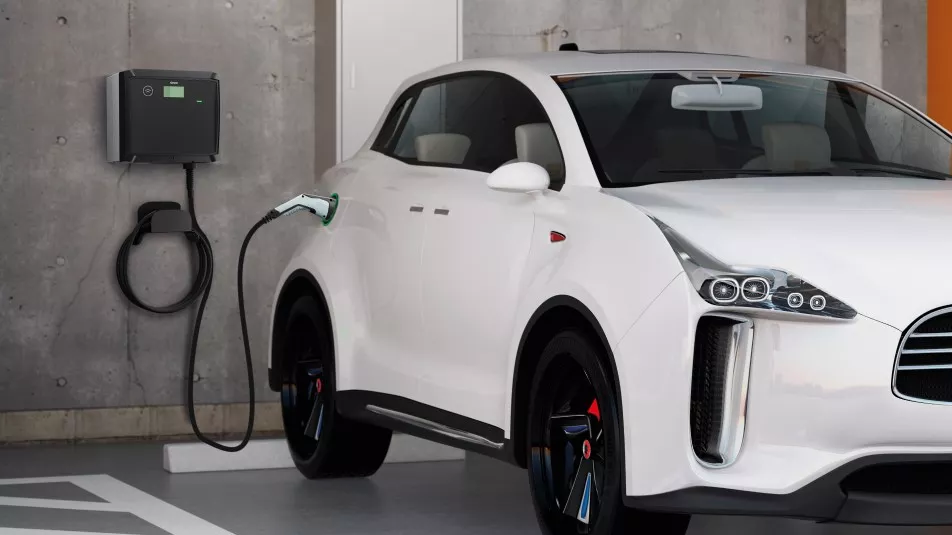
There are also different charging modes. The international standard for these is defined in the IEC-61851 standard.
Mode 1. Charging takes place without parameter communication between the vehicle and the charging points for the electric car. It is the simplest compared with the others.
Mode 2. In this one, by contrast, parameters are communicated at a low level. An intermediate device is connected to the cable to provide visible control of the charging status.
Mode 3. The level of parameter communication is high. The control devices are inside the charging point and the connector has the data exchange cables built in.
Mode 4. In direct current, there is also a high degree of parameter communication. It is ideal for fast charging and is normally restricted to charging stations.
The most common and the one recommended by manufacturers is mode 3, with the Type 2 or Mennekes connector (the most used in Europe). Optionally, modes 1 and 2 may be better if you have a vehicle with low charging needs or when mode 3 is not available at the electric car charging points.
Recommended power for installing an electric car charging point
Charging power has a direct impact on how long charging takes. We can set an approximate relationship between both variables, although the maximum charging speed ultimately depends on each vehicle model. Based on power, we therefore have four charging speeds:
3.7 kW. Slow, taking approximately 10 hours.
7.4 kW. Semi-fast, around 6 hours.
22 kW. Fast, an hour and a half.
50 kW. Ultra-fast, just 20 minutes.
If we prioritise charging speed, we all choose the highest power, but choosing a high power has its drawbacks. Above all, it requires an expensive specific installation, which is much simpler for lower power levels.
In short, we must find the right one for our charging speed needs, without raising the contracted power term too much. We can also save by taking advantage of time-of-use tariffs and planning charges during the cheapest hours by adding a time programmer.
Which consumption meter system is best?
The current Spanish installation regulation ITC-BT-52 (Technical Instruction of the Low Voltage Regulation) offers multiple different solutions depending on the case.
For single-family homes or company car parks with a private garage, you can use the meter of the home or company, if the power of the electric car charging points does not exceed the power already contracted. The contracted power can also be raised only if more is needed.
In homeowners' associations, to account for the costs of charging vehicles you can install a secondary meter and pay the association. You can also register a new independent meter or use a private one.
Another possible option for homeowners' associations and public car parks is to install electric car charging points for shared use. Each driver has an identifying RFID card that records the consumption made. Then, the association or the car park manager passes the cost on to the user.
Who is in charge of installing electric car charging points?
Any professional with an electrical installer's licence can install electric car charging points. Only in certain cases will they need to start a new project to install them. The scenarios and their limits are set out in the aforementioned ITC-BT-52 regulation.
It is required for installations larger than 50 kW of power, outdoor installations above 10 kW or installations for charging mode 4. It may also be required for extensions of installations that already required a project initially, if the power of the previous project is increased by 50% (RDL 647/2011).
We recommend checking our directory of specialised companies and distributors if you need to install a charging point. You can contact a professional near your location with no obligation. They will advise you on how to carry it out.
How much does an electric car charging point cost?
The current price of installing charging points in Spain sits in a range between €700 and €1,500, as the lower figures used years ago (around €300) have become obsolete due to the rising cost of materials, mandatory protections and labour.Whether the cost is higher or lower depends on several factors, such as the charging power, the distance to the electrical panel, the need for civil works or the type of installation (single-family home, shared garage or business).
Furthermore, the price can vary depending on the type of charger chosen. The most basic equipment, designed for home use and power levels of 3.7 kW or 7.4 kW, tends to sit at the lower end of the range. By contrast, three-phase chargers of 11 kW or 22 kW, or those that include advanced features such as dynamic power management, WiFi connectivity or app-based control, push the budget up. It also depends on whether the installation requires long ducting, drilling or adapting the electrical panel.
How much does it cost to charge an electric car?
This varies even more, even depending on the price of electricity at the specific moment when charging takes place. This of course depends on the type of tariff contracted. In any case, we can estimate some costs depending on where you charge:
At home. The average domestic price in 2025–2026 is variable, ranging between €0.12/kWh and €0.25/kWh. Based on these figures, fully charging a 70 kWh battery can cost from €8.40, with a tariff of €0.12/kWh, to €17.50 if the tariff is €0.25/kWh.
Away from home. It depends on which charging station you go to. For example, at present, with Endesa it costs between €31 and €55 to fill the battery, depending on the charging power (from up to 100 kW to more than 350). With Iberdrola, the price range is between €27 and €48 (from up to 22 kW to more than 50 in power).
In conclusion, electric car charging points are gradually proliferating, as this zero-emissions mobility is being pushed forward. So it is important to be well informed and know everything it entails — from how it is installed to how much it costs to use to keep your vehicle ready to drive.