)
This article looks at various strategies and solutions for hotel reconversion: ecological renovation, refurbishment, energy upgrades, sectoral circularity and a sustainable guest experience.
1. Renovate versus build: the first link
Against the traditional linear “take, make, dispose” model, renovation and circularity — where waste becomes a resource — are gaining ground as effective alternatives against climate change.
Unlike new construction which, even when highly efficient, carries an enormous “carbon debt” — built up during the extraction and processing of raw materials, production, distribution and construction — refurbishment generates lower emissions, less waste, requires less energy and draws on the value already built, drastically reducing environmental impact.
2. Circularity and sustainability: the strategic shift
Turning an old hotel into a sustainable asset means the refurbishment and interventions must bring together cross-cutting solutions that deliver multiple advantages, such as:
Recovery and selection of low-impact materials: recycled, durable, locally sourced, natural (wood, cork, mineral wool…) or certified.
Reuse and repair of components: extending the lifespan — on site or off site — of structural, utilitarian or decorative elements (beams, carpentry, furniture, textiles, sanitary fixtures…).
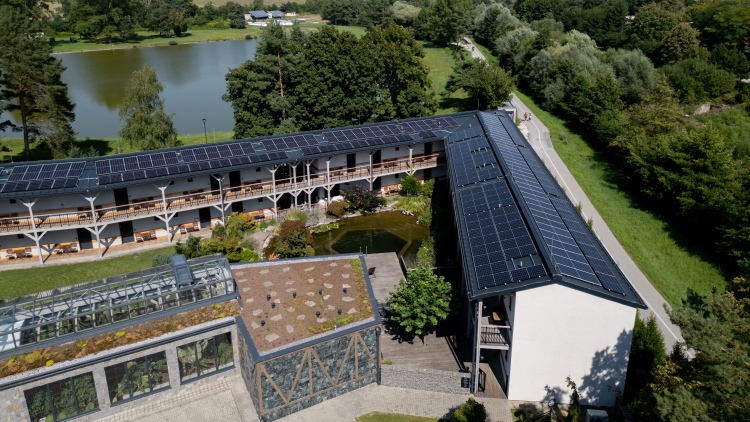
Energy retrofit, renewables and self-generation: efficiency, energy sovereignty and savings on the bill thanks to alternative sources such as geothermal, aerothermal, solar, green hydrogen or wind power.
Water recycling and reuse: flow savings, greywater treatment (showers, sinks, washing machines) for non-potable uses (cisterns, irrigation…) or rainwater treatment (ponds, landscaping, permeable surfaces…).
Preventive maintenance, management and monitoring: smart technology, sensors and measurements to support informed decision-making.
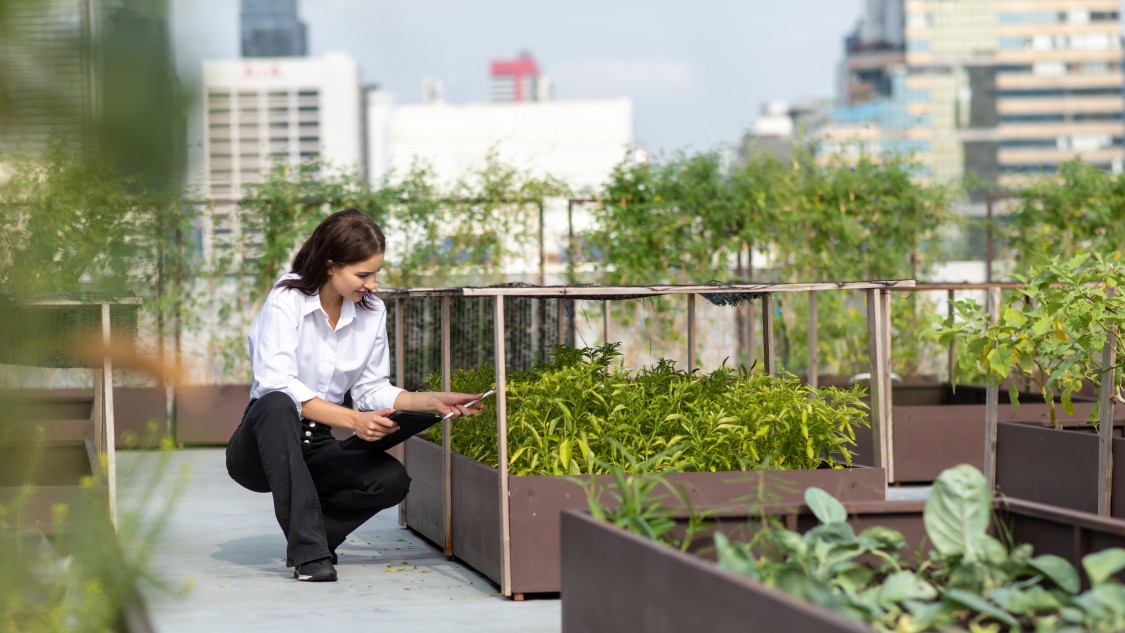
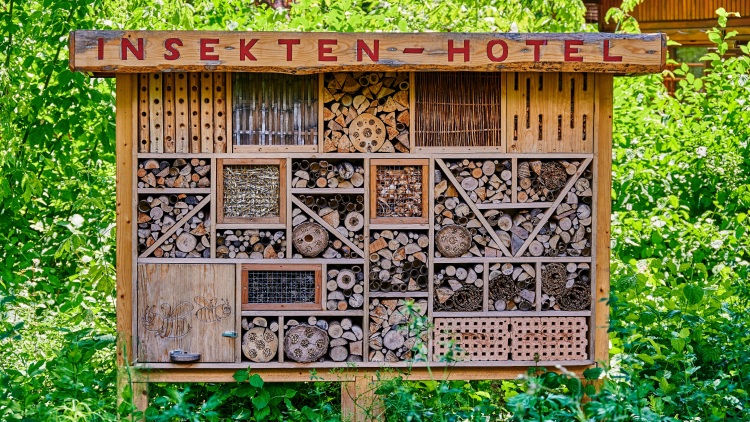
Green roofs and flexible, multifunctional spaces: thermal insulation, rainwater storage, aesthetic value, biodiversity refuge and a food reserve.
Alongside structural measures, complementary strategies are spreading:
“Zero” plastic, waste prevention and food waste reduction: filtered water, surplus donation, repurposing (compost, soap making…), etc.
Ecological products and services: biodegradable items, seasonal menus, local suppliers, bicycle hire…
Awareness, education and incentives for staff and guests: managing energy and water demand (less frequent turnover of towels, linen, etc.).
3. Redefining the guest's role
Today's traveller appreciates accommodation aligned with their conscience and values, seeking out more authentic stays that feel close to being “at home”.
This trend is reinforcing the tourism industry's green transition and, in turn, consolidating innovation built on smart solutions such as LOLA.
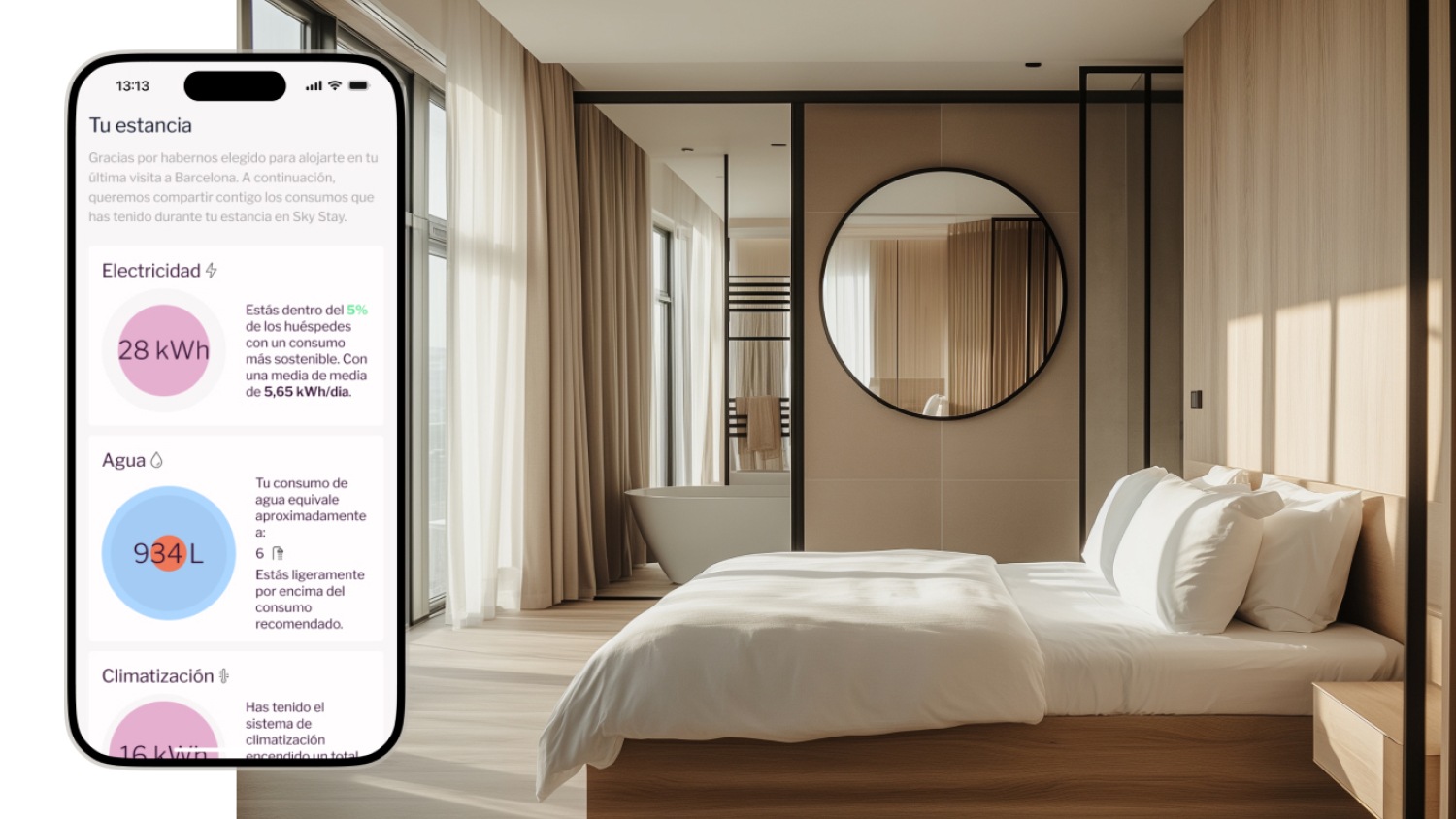
This digital ecosystem from Simon transforms the guest experience by personalising the hotel room, which becomes a smart, sustainable environment. LOLA creates a natural, well-being atmosphere through its intuitive interface for adjusting lighting and climate and monitoring consumption, cutting environmental impact and improving guest satisfaction.
4. Well-rounded experiences: from theory to practice
Environmental commitment, more than a choice, is an exercise in climate responsibility and an asset for both major chains and one-of-a-kind establishments that have become benchmarks:
Hotel Marcel (New Haven, USA): this carbon-neutral, passive-design industrial building is 100% electric; it produces more energy than it needs thanks to its 1,000 solar panels, and features recycled materials, waterless biofilters, an edible garden and a bat shelter.
Ruby Emma Hotel & Bar (Amsterdam, NL): this modernised hotel maximises renewable energy and benefits from its smart façade clad in fired glass that prevents overheating.
Hotel Milano Scala (Milan, IT): this restored palace, with zero emissions, draws on a thermal aquifer for heating, cooling and domestic hot water; it has solar panels, a rooftop garden, compostable tableware, and filtered water dispensed in its own bottles to avoid plastic.
Hotel Four Seasons (Madrid): its heritage refurbishment included a low-maintenance green roof. It features a passively cooled wine cellar; oil recycling, plastic containment, and BREEAM certification for its sustainable management systems.
Six Senses (Ibiza): a refurbished, passively cooled resort committed to biodiversity and environmental education; low architectural density, organic food, native flora and fauna, zero plastic, water savings and the Earth Lab programme.
Hostal Grau (Barcelona): a 19th-century building refurbished to LEED Gold standards, fitted with smart home automation and with a strong commitment to the local economy and the employment of young people at risk of exclusion.
5. A roadmap with no turning back
Sectoral sustainability and circularity are an opportunity in a competitive, regulation-heavy market that calls for the involvement of the entire value chain, from developers to the increasingly conscious end customer.
Success means prioritising modernisation and ecological renovation, energy upgrades and rolling out management, efficiency and monitoring — and pushing for hospitality sector certification (LEED, BREEAM, Passive House, Biosphere…) to accelerate the green transition across the industry.
In parallel, transparent communication of good corporate practices, real-time consumption and impact data is essential, even considering financial incentives to reward proactive staff and guests.
It is also vital to support the preservation of the place's essence, good coexistence and collaboration with local stakeholders (suppliers, the commercial and associative fabric, the social economy…), and to encourage local training, employment and development: real urban and social revitalisation of the surroundings.
All this ensures a strong territorial fit and favourable public perception — antidotes to “tourismphobia” and an economic lever for the sector and its stakeholders.

Text by Sònia Roura Valls