)
During the sixties and seventies, industrial design began to look at everyday life with new eyes. The home, household objects and the small gestures that make up our daily routine started to take on new importance.
It was no longer enough for objects simply to work. They also had to fit into their surroundings, deliver aesthetic quality and improve people's experience.
In Spain, this shift coincided with a period of economic and cultural transformation in which industrial design was beginning to consolidate as a discipline. Everyday objects became a field of experimentation where functionality and aesthetics could meet.
It was in this context that Simon decided to bring this perspective to something as simple as a light switch.
The nonconformist gesture
Series 36 was born out of that will to rethink the everyday. Conceived in 1965 and brought to market in 1971, it represented a break with the existing standards in electrical mechanisms.
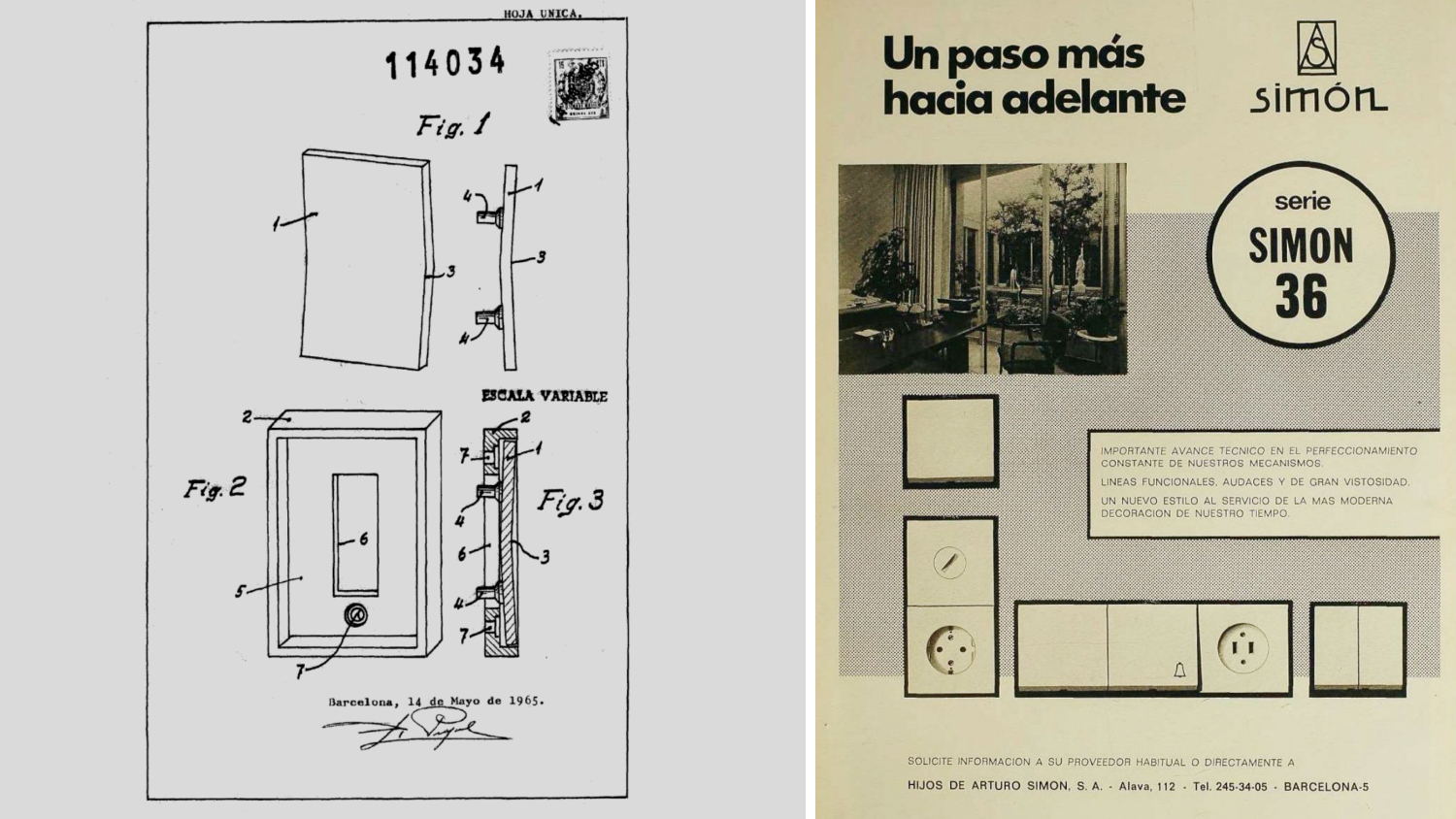
At a time when small, discreet switches predominated, Simon backed a different idea: a larger, more visible rocker that was easier to use.
It was the first wide-rocker series in the Spanish market. An apparently simple change that transformed the relationship between people and the object.
The switch stopped being a purely technical element and became a component thought through from the perspective of design.
With Series 36, Simon showed that even the most everyday objects could be conceived with an aesthetic intent and special attention to the user experience.
Designing the essential
Series 36 also represented a new way of understanding electrical mechanisms.
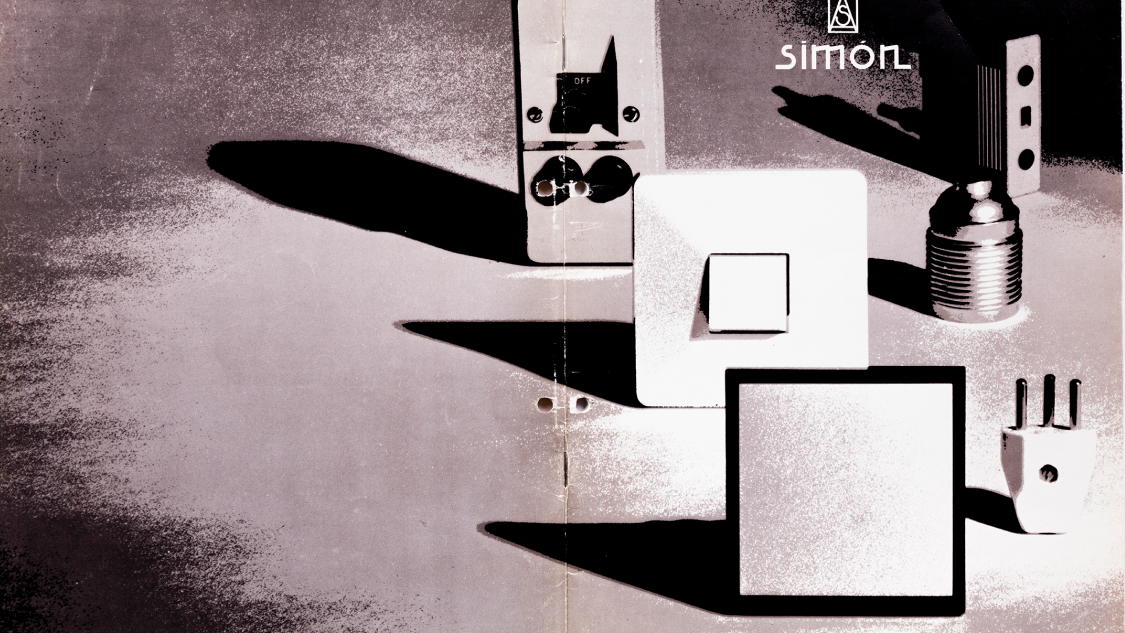
Its design embraced geometric simplicity: straight lines, square shapes and clean surfaces that dialogued with contemporary architecture. The sober, neutral finishes allowed the mechanism to integrate naturally into different interiors. Colours such as white, ivory or the decorative tones typical of the seventies reflected that desire for discretion and visual balance.
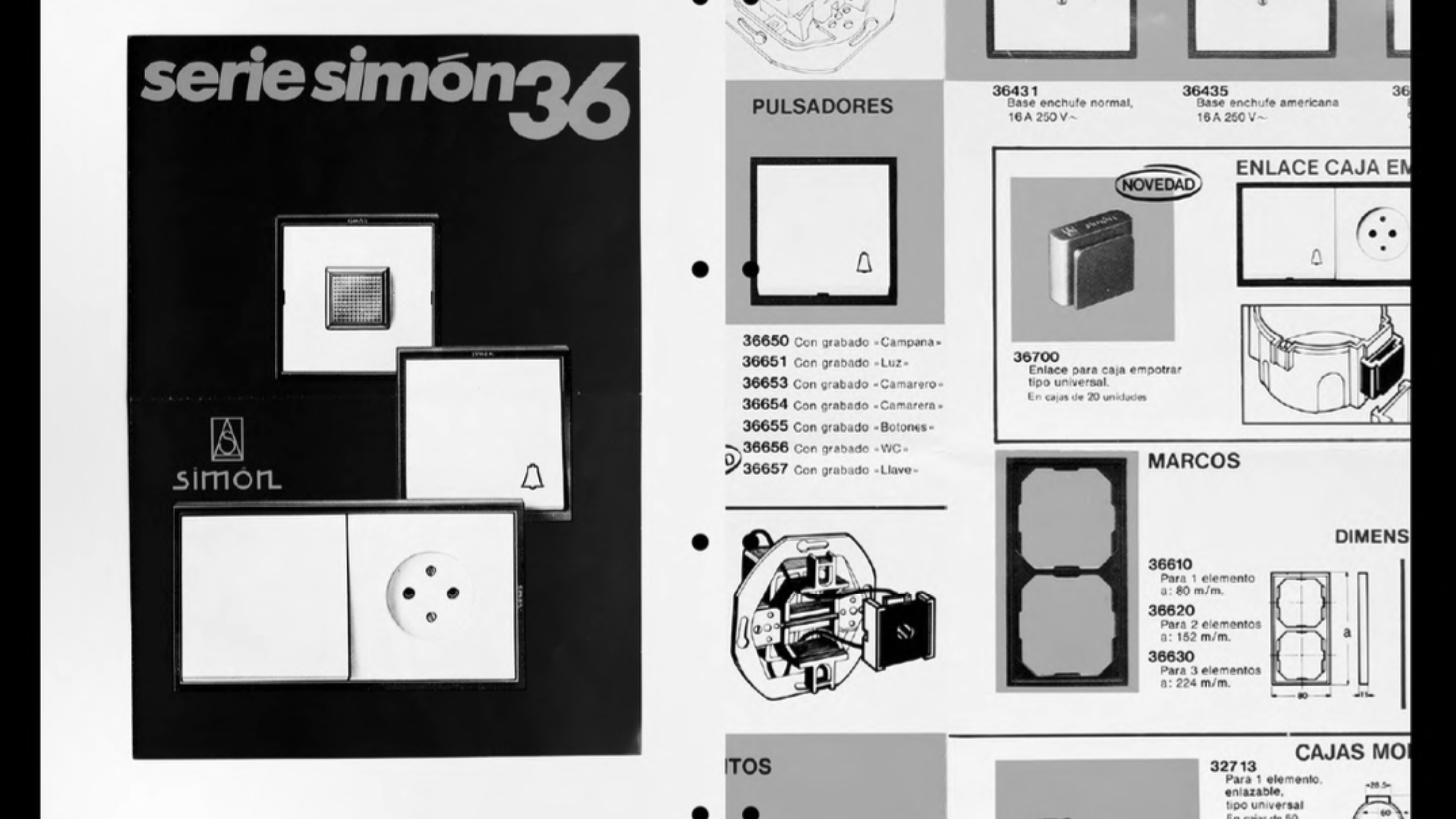
But the innovation wasn't only aesthetic. Series 36 also improved the user experience. It featured soft-touch rocker keys that replaced the old button or lever switches. The enlarged surface of the rocker made everyday interaction easier, anticipating an evolution towards increasingly ergonomic solutions.
It also introduced greater modularity. Double or triple modules could be integrated into a single plate, optimising space and simplifying installation.
A detail that also shapes the space
At the time of its launch, Series 36 was seen as an innovative proposal within the world of architecture and interior design.
Professionals who were starting to care for every detail of the space found in this series a discreet, effective ally. Its aesthetic neutrality allowed it to be integrated with ease into very different projects, from homes to offices and hotels.
The mechanism did not seek the spotlight, but it helped build a more coherent, carefully considered spatial experience.
In this way, Series 36 not only improved the everyday interaction with electrical mechanisms. It also helped consolidate the idea that technical elements are part of the language of space and can take part in its design.
An icon of good industrial design
Over time, Series 36 has stood out as one of the products that best represent the spirit of Spanish industrial design from the seventies.
Its combination of formal sobriety, useful innovation and attention to the user reflected a way of understanding design that remains fully relevant.
More than just an electrical mechanism, it was an important step in Simon's evolution towards solutions increasingly geared to people's well-being and the quality of the space. Its legacy shows that even an apparently simple object can become a benchmark.
Today, nonconformism returns
That nonconformist spirit that drove Series 36 still forms part of Simon's DNA. Today, more than half a century later, it returns reinterpreted in a new proposal.
Simon 360 is not just a reissue. It is a way of revisiting an icon of industrial design, preserving its original essence and adapting it to contemporary needs.
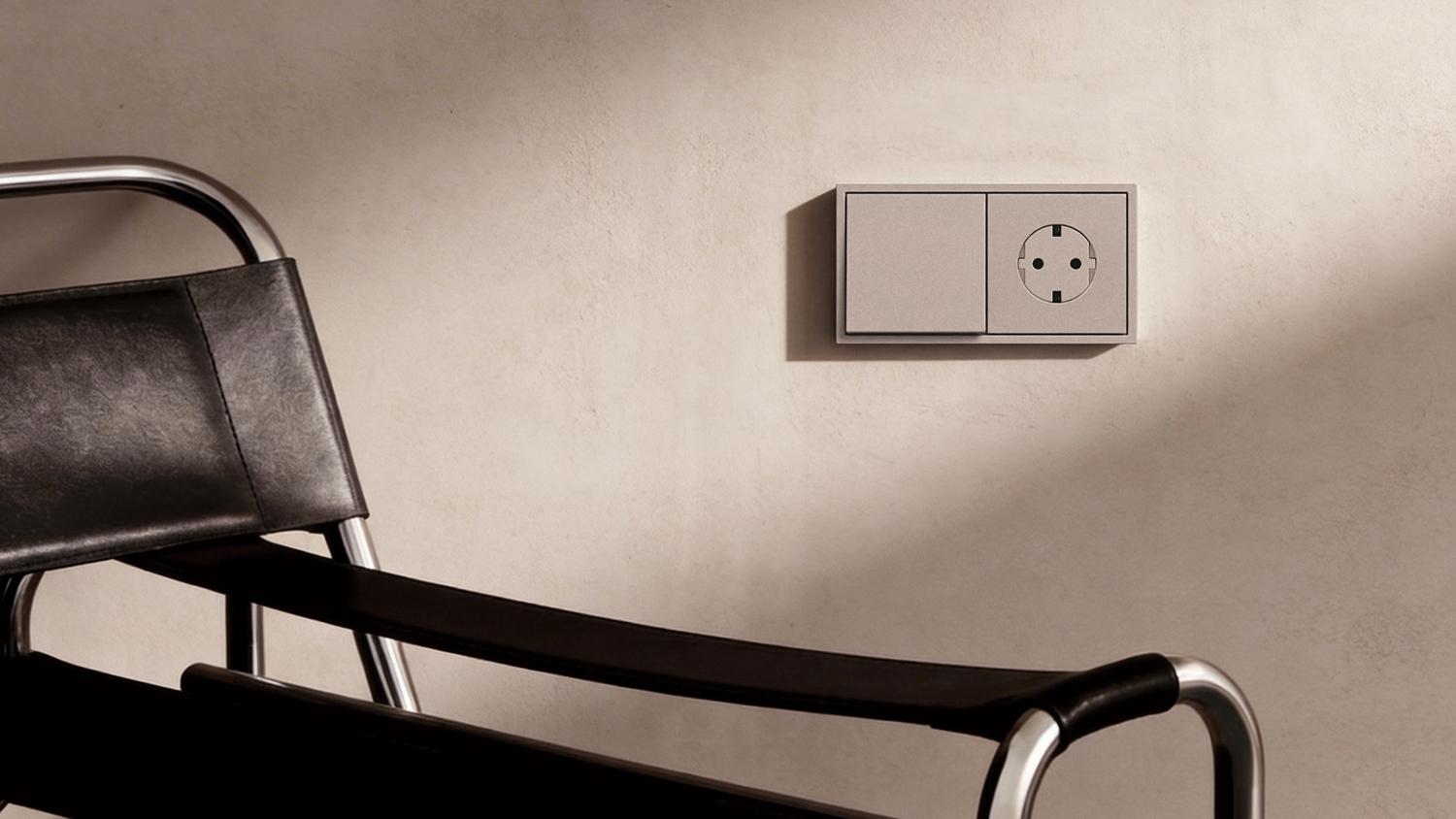
Reinterpreting Series 36 today means recognising the value of its legacy and projecting it into the future.
Because only a brand with history can afford to look back in order to keep moving forward.
From that nonconformist gesture born in 1965 now emerges a new evolution of everyday design: Simon 360.