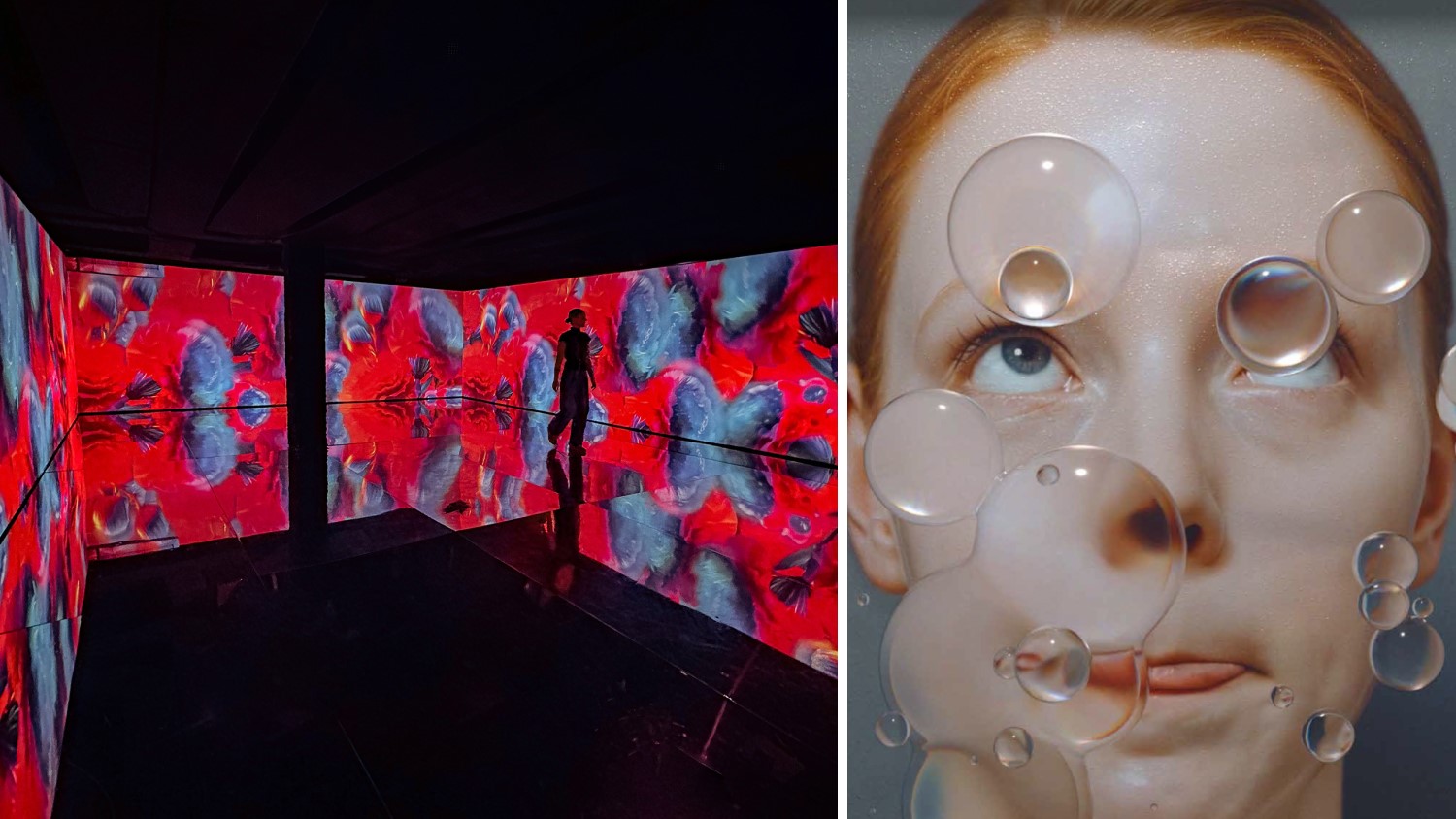
Hotel design is no longer about defining forms, materials or lighting. Today, spaces are conceived as living experiences, able to adapt, move and dialogue with those who inhabit them. In this context, digital art and generative artificial intelligence are emerging as new creative tools to build remarkable identities in contemporary hospitality.
Bringing digital art and AI-generated art into hotel spaces as part of the guest experience is a rising trend that architecture studios are beginning to embrace.Applying these technologies makes it possible to create unique, personalised and dynamic environments — the result of exploring the aesthetic, technological and emotional benefits they can bring to users. The impact on the individual perception of space and brand differentiation thus become two of the main goals of the new hotel visual identity.
The use of digital art in hotels and AI-generated solutions show that the design of future hospitality is intrinsically linked to new technologies. Against this backdrop, the Ambit Cluster has recently published the report Generative AI Trends in Hospitality Design, developed in collaboration with CETT Barcelona School of Tourism, Hospitality and Gastronomy and the tech company Sciling. These three institutions set out to analyse the extent to which “generative artificial intelligence is transforming the management, design and experience of spaces in the hospitality sector,” they note.
Hotel design and generative AI_1500_844_1
A trend is born
Although still an emerging practice, the first cases of using digital art in hotels are starting to point the way. That is why Ambit Cluster gathered experts such as Jaisiel Madrid, Brina Antúnez and Germán Sanchis this January to reflect on the impact of generative AI in the sector. According to Ambit Cluster, the meeting is aimed at “design teams and the people in charge of innovation, marketing and strategy in the habitat sector who are looking for guidance on how to move forward in transforming hospitality projects through generative artificial intelligence.”
In its role as a cluster, Ambit drives collaboration between designers, manufacturers and space managers, noting that “CETT has contributed its academic vision and applied research in tourism and hospitality, ensuring sectoral and contextual rigour, while Sciling, as a company specialising in generative artificial intelligence and multi-agent systems, has provided the technological know-how needed to offer an up-to-date and practical analysis of the real reach of this technology in the sector.”The conclusions and case studies arising from the gathering held on 23 January in Barcelona will likely shape future lines of development.
Inspirations and advantages of design with AI
Along these lines, Ambit draws inspiration from creators at the cutting edge of AI design, such as the architect Amir Hossein Noori and the start-up Laurel Visuals. Both have taken part in forums debating how “generative technologies are transforming the designer's role and the user experience during the development of projects in the hospitality sector.”
For Ambit, “generative AI does not only optimise processes, it also opens up new aesthetic and functional narratives in interior design. For space managers, it is a strategic tool that helps anticipate user needs, optimise resources, personalise experiences and improve decision-making in the configuration and operation of environments.”
A vision shared by Arup, the global architecture, engineering and consulting firm, which states that “artificial intelligence is completely transforming the design of cities and infrastructure”. It also believes that “AI applied to urban design and infrastructure can reduce construction costs and improve sustainability, accelerating the transition to greener, more resilient cities.”
Artificial intelligence and art in hotels
On AI-generated digital art, Pepa Casado D'Amato, founding partner and lead researcher at Futurea and recently creative director of Interihotel, notes: “There are examples, but they are still scarce if we stick strictly to AI-generated digital art in hotels. What does exist is a very active debate in the digital art world, where languages and formats are being tested that will end up filtering through into hospitality.It is reasonable to think that, as a market for this kind of work and installations consolidates, we will see more hotels — especially in singular or signature projects — incorporating proposals of this kind.”
Hotel design and generative AI_1500_844_2
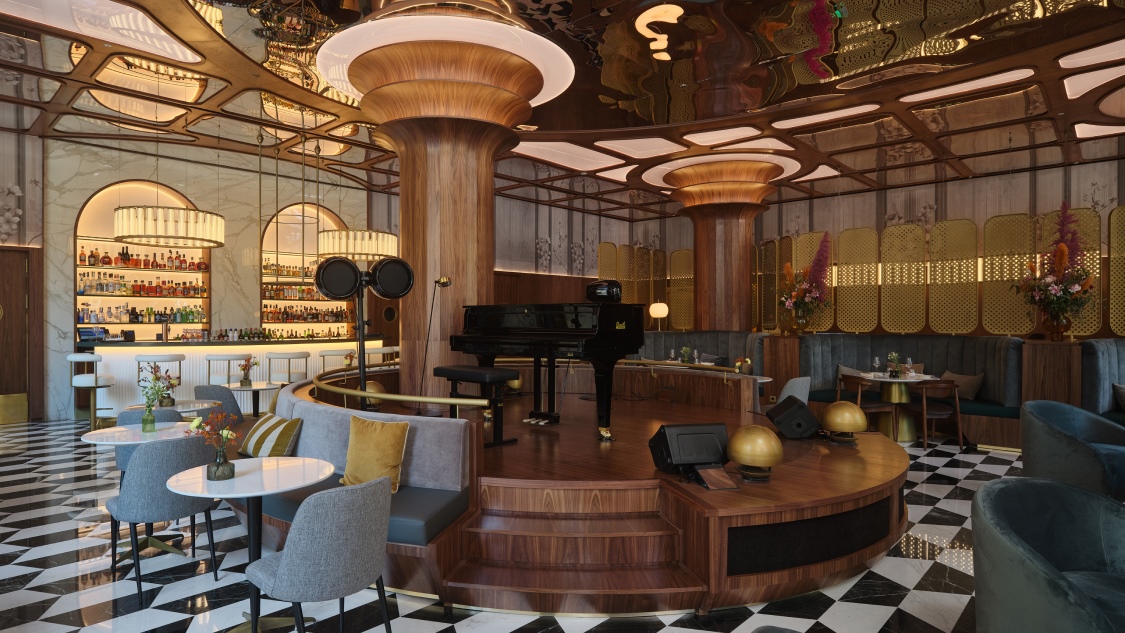
A notable case study is that of the ERRE architecture studio and the creative process developed for the art collection of the Grand Hotel Centenari Valencia. The commission was to create a series of contemporary works that went beyond the merely decorative. “We set out for them not to be simply decorative pieces, but to build a visual narrative coherent with the identity of the place, encouraging guests to get to know different corners of the city while showcasing its historic heritage,” they note.
Art déco emerged as the most suitable language, since the building was designed in 1925 and “reflects a clear influence of the Chicago School.” The team, however, opted for “a reinterpretation through a local lens, giving rise to a ‘Valencian art déco'”, establishing a more genuine dialogue with the architecture and history of Valencia.
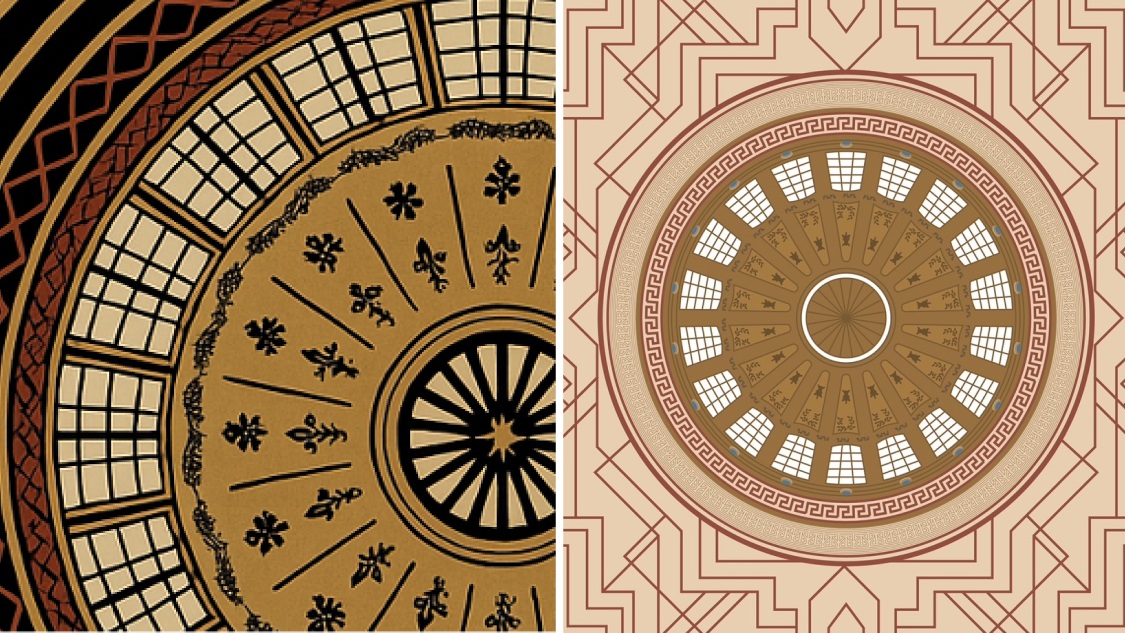
The process combined the preparation of “an image and reference bank to guide the visual development” with the use of AI as an exploratory tool.As ERRE emphasises, however, technology does not replace human authorship. In line with Casado D'Amato, who states that “there is no art without a human being behind it”, the studio notes that AI “was a tool for exploration and sketching”, making subsequent manual refinement necessary.
Example of AI vs human quality, fruit of ERRE's research, inspired by the dome of the Mercado Central de Valencia and later applied to the decorative elements of the Grand Hotel Centenari Valencia.
The final result connects guests with the urban surroundings and confirms that artificial intelligence, when integrated thoughtfully, expands the creative possibilities of design without displacing the human gaze that gives meaning to spaces.
)