Gaudí lived at a time when the great cities were growing through their “urban expansion” plans, when new, ordered and sanitised urban grids were drawn up to reverse the overcrowding and poor sanitation of the old quarters under the influence of hygienist movements. It was the time of the “Haussmann” plans for Paris and “Cerdà” in Barcelona, of early industrialisation, the spread of large fortunes from overseas and the rise of an ostentatious bourgeoisie.
Gaudí, a precursor of sustainability
4 min read
)
Straddling the 19th and 20th centuries, Gaudí is one of the leading figures of Catalan modernism and a pioneer for masterfully bringing ingenious, sustainable solutions to his buildings. In him, talent and technique come together with curiosity, intuition, artistic sensitivity and respect for tradition, work and the artisanal trades he had seen in the family ironworks. This article delves into the keys of his philosophy, his work and his legacy.
Nature as teacher and expression of the divine
The Catholic faith and nature were two of Gaudí's driving forces. For him, the natural world, of divine creation, was a “great book, always open, that one must strive to read.”
With an outstanding capacity for observation and research, and the patience for trial and error in his laboratory, Gaudí would go beyond classical principles with an iconographic catalogue and bespoke solutions inspired by patterns in nature. The result is an organic architecture that pairs function and beauty to perfection, creating a harmonious whole rich in details that dialogue with the surroundings.
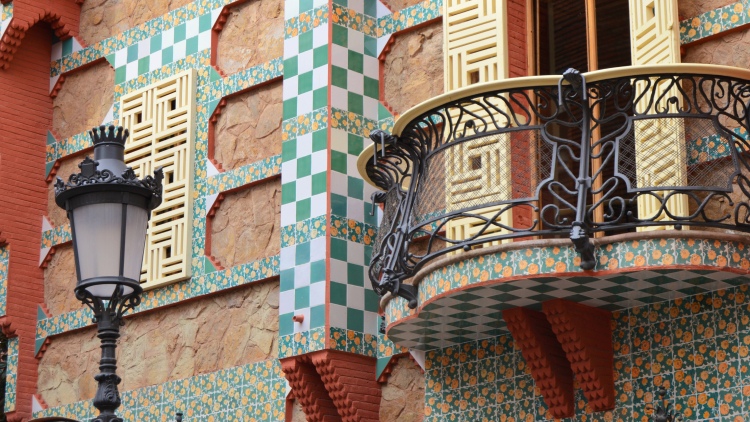
Nature is a reference throughout his work, full of secrets and mysteries. Even in the eclectic Casa Vicens (1883-1885), oriented towards a garden, he lavishes plant-inspired decorations and references.
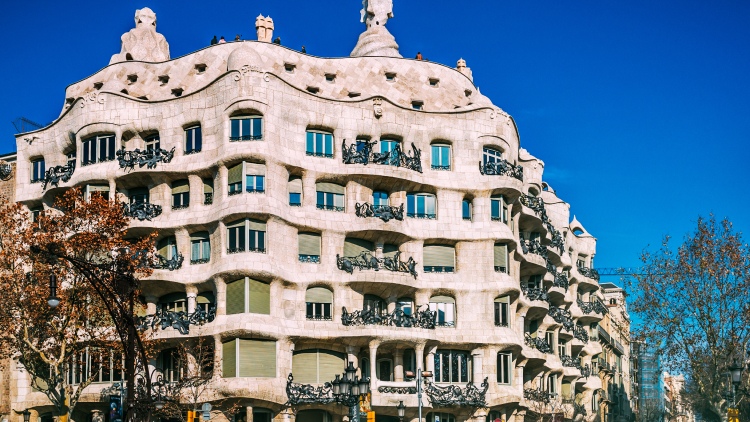
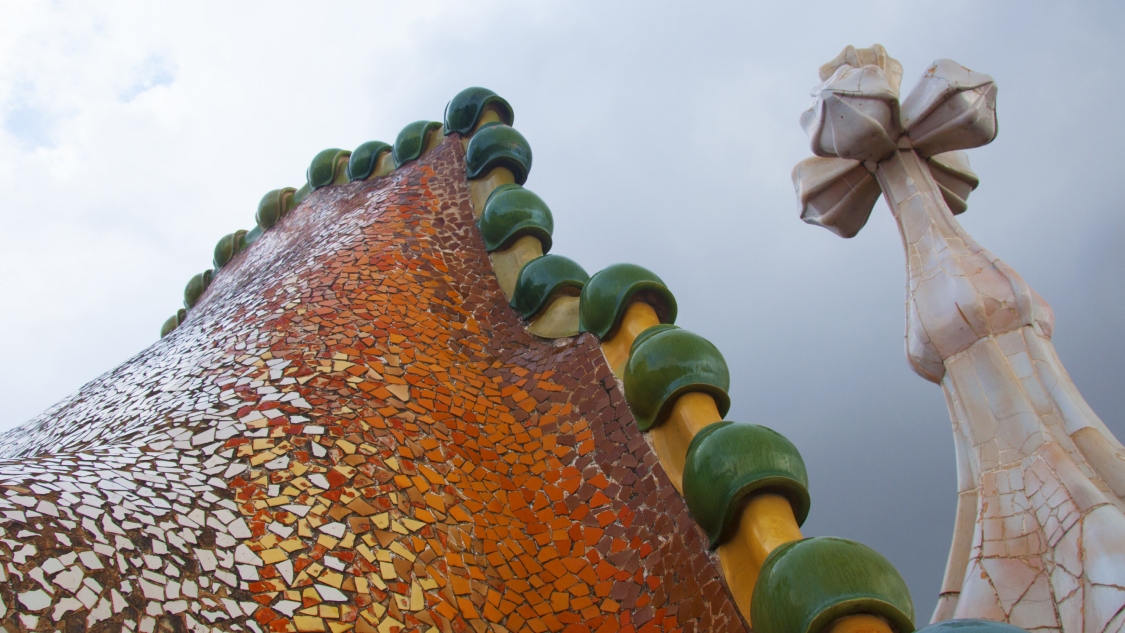
Later, the fantastical refurbishment of Casa Batlló (1904-1906) — apparently of marine inspiration — saw the façade adorned with recycled materials that compose a mosaic shining in the daylight. Nearby, the singular Casa Milà (1906-1912) would offer a contrast with its austere appearance, earning the nickname “La Pedrera” for looking like a mass of stone in the middle of the elegant Paseo de Gracia.
On another note, the geological formations of Montserrat directly influenced the great Sagrada Familia project, conceived as a living organism. There, Gaudí recreates a lush forest through columns where sunlight filters in through stained glass, creating a mystical atmosphere.
Ecosystemic architecture with roots
Gaudí was a pioneer of environmental, economic and social sustainability with his functional, efficient and aesthetic architecture and structures, based on geometries drawn from nature.
He also paid special attention to climate, location, terrain and orientation, aware of the benefits of making the most of resources and energy. By using natural and local materials, he minimised transport, while his taste for the artisanal — giving prominence to ironwork, mosaics, coffered ceilings, stained glass and more — gave value to the know-how of the craft and to tradition. With an artistic eye, he was also able to turn imperfect or discarded glass or ceramic into an original composition such as the “trencadís”, which fitted curved surfaces perfectly.
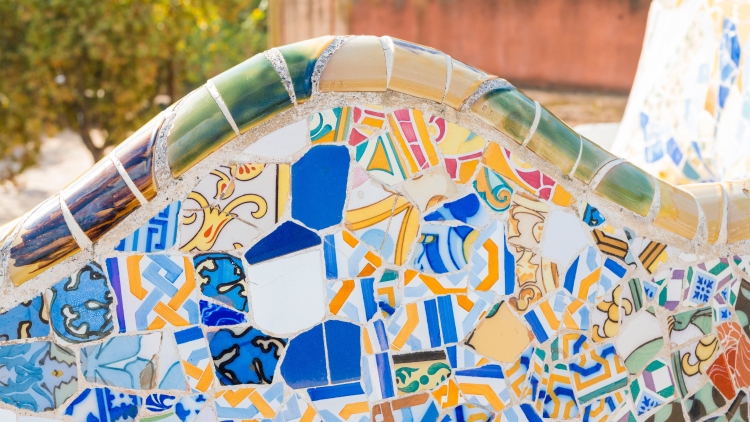
Gaudí's legacy is inseparable from the Catalan landscape, culture and identity — its foundation and a continuous source of inspiration.
A social, spiritual and symbolic body of work
Gaudí poured a vast amount of wisdom and creativity into his projects, often serving an emerging bourgeoisie that displayed its capital through a sculptural and exuberant architecture. He also saw his work, however, as a tool for collective transformation and progress, connecting with social utopias.
For Gaudí, nature, society and architecture were intrinsically linked, and he put this into practice as early as the age of thirty in Casa Vicens, regarded as his manifesto house.
According to his ideology, architecture had to safeguard good living and health conditions, and become a refuge for the soul and the spirit by incorporating artistic values to shape the character of those who inhabited it, treating spaces as having the power to positively influence individual and community well-being and development.
At the same time, the rich historical background and sense of geography and belonging so deeply rooted in Gaudí come through in the reinterpretation of Christian, mythological and patriotic symbols that crown his buildings.
Beyond his time
Antoni Gaudí defended the rationality of his approach with great conviction: “My ideas are of unquestionable logic; the only thing that makes me doubt is that they had not been applied before.”
His thinking, imagination, integration of knowledge, expertise and exceptional skills, his unique way of working and, above all, a holistic vision for designing living spaces are fully contemporary qualities that will endure and prove key to facing future challenges.
His contemporary relevance lies in his good practices, sometimes choosing refurbishment and always offering efficient solutions through natural, local materials and optimised resources, laying the foundations of passive systems for energy and water saving.
His deep respect for the surroundings and bond with the place, together with his concern for people's well-being, make his constructions form a social and natural ecosystem, standing as a beacon for the sustainable architecture of the present and the future.
Text by Sònia Roura Valls