In this context, environmental certifications act as one of the antidotes. In this article, we give you the main keys to the sector's decarbonisation.
Certifications: a path towards architectural decarbonisation
5 min read
)
Buildings account for 34% of the world's carbon dioxide (CO₂) emissions. In this context, environmental certifications act as one of the antidotes. In this article, we give you the main keys to the sector's decarbonisation.
Buildings account for 34% of the world's carbon dioxide (CO₂) emissions.
Why certify?
The pro-certification movement dates back to the 1970s, as a response to the energy crisis, and has grown alongside society's gradual environmental awareness. Today, in an unfavourable climate scenario, sustainable certification labels have become an effective tool for mitigating environmental impact and complying with regulations.
Based on shared rules of the game and rigorous standards, sustainable certification assesses critical parameters and sets systemic criteria that support design, construction and management decisions throughout the building's life cycle.
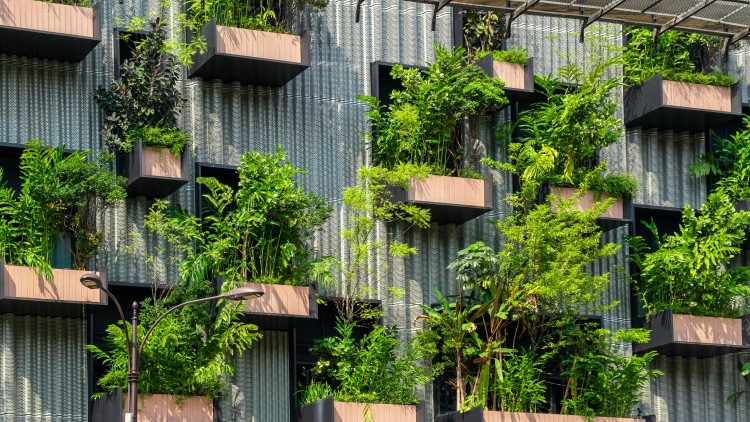
A world of certifications
There is currently something of a certification fever, particularly for corporate projects, public facilities, residential buildings and even urban environments.
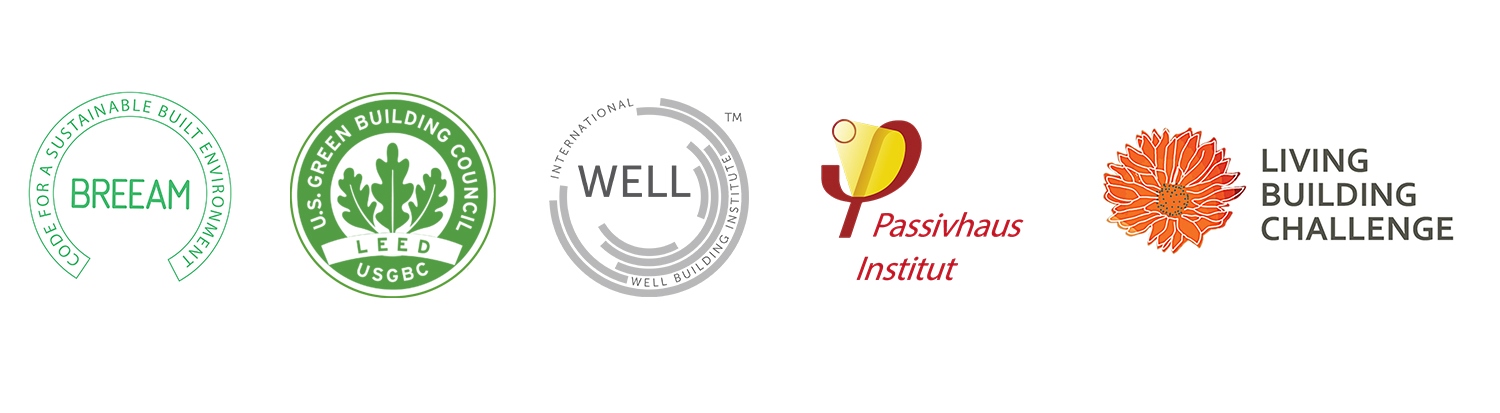
The most internationally recognised standards include:
Building Research Establishment Environmental Assessment Method (BREEAM). Originally from the United Kingdom, it takes a life-cycle approach and is very popular in Europe.
Leadership in Energy and Environmental Design (LEED). Emerged in the United States, it takes a holistic view and is widely used by large corporations.
WELL. Puts human health and well-being at the centre.
Passivhaus. A German standard focused on passive measures to achieve minimal energy consumption.
Living Building Challenge. Seeks the perfect symbiosis between architecture, people and surroundings.
There are also labels tailored to other realities and local contexts, such as VERDE in Spain, which aims to balance social, environmental and economic aspects, or DGNB, a German label with a strong technical and economic basis.
Although the certification process is long and complex, it brings a range of benefits:
Environmental:
Long-term environmental commitment.
Reduction of the impact on the planet.
Mitigation of climate risk and greater resilience.
Economic:
Resource optimisation.
Operational efficiency and lower consumption.
Lower running and maintenance costs.
Social:
Architectural quality and good interior design.
Stakeholder involvement.
People's well-being, health and safety.
User comfort and satisfaction.
Urban integration, contribution and positive community perception.
Strategic:
Driving innovation and continuous improvement.
Ability to attract and retain talent, and productivity.
Brand positioning, image and prestige in the eyes of clients, investors and users.
Added value and competitive advantage.
Greater appeal, market value and green financing opportunities.
Certifications set out specifications and measure multiple parameters, encouraging savings, efficiency, good management and impact control based on:
Site. Urban density, ecological value, emissions and erosion control, light and noise pollution, restoration of surroundings, etc.
Accessibility. Safe, pleasant outdoor environment, services, public transport, bicycle parking, promotion of walking and active mobility, etc.
Materials and resources. Origin, natural materials, ecolabel, reuse, recyclability, life cycle (LCA), water footprint, dematerialisation, waste minimisation and reduction, circularity, selective collection and proper management.
Energy. Bioclimatic principles, orientation, insulation and passive design, renewable sources, self-sufficiency, natural lighting and climate control, efficiency, monitoring of energy demand, electric vehicle chargers, mobility plan.
Water. Capture and drainage systems, stormwater management, savings and efficiency, water reuse, low-water vegetation, monitoring.
Naturalisation. Biodiversity, landscaped areas, green and energy roofs, food production.
Health and well-being. Visual, thermal and acoustic comfort, indoor air quality, natural light and outdoor views, conscious eating, physical activity, privacy, inclusive design, ergonomics, presence of greenery, etc.
Emissions and life-cycle management. Assessment of the carbon footprint of construction and use, and management of the design process.
SWITCH, a factory with many lights
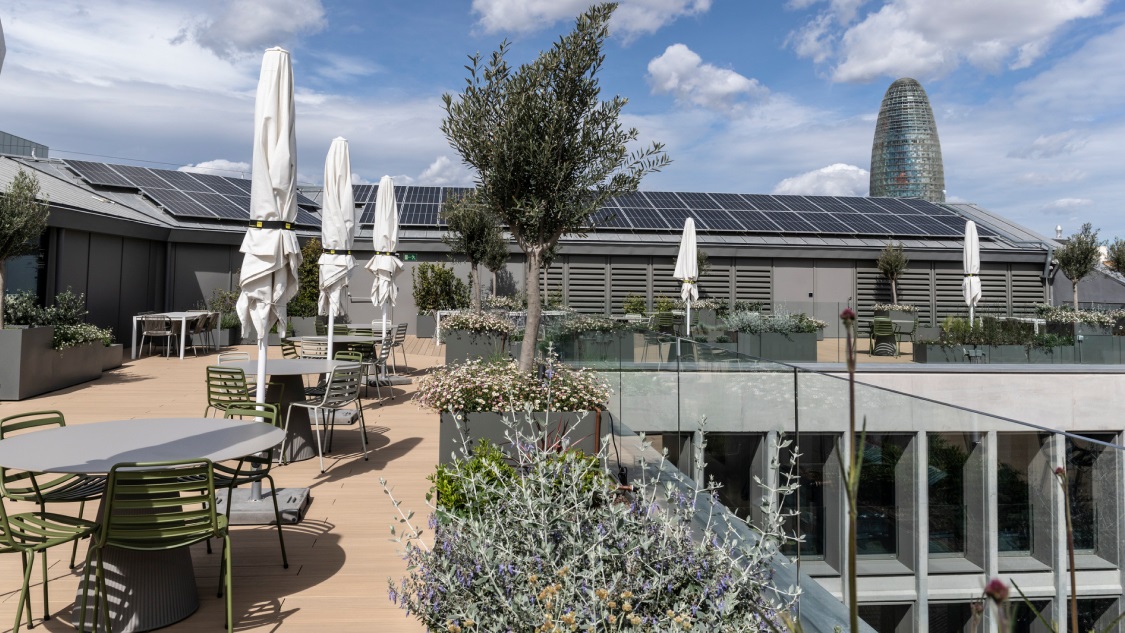
Simon's corporate headquarters, known as SWITCH (Simon, Worldwide, Innovation, Talent, Community, Hub) and opened in 2023, is a good example of sustainable architecture; it has been recognised with the LEED Platinum, Lean2 Cradle and WELL Platinum certifications for its excellence.
Durability was chosen from the outset through the refurbishment of the former factory, led by Fermín Vázquez and b720, giving it new life, safeguarding the industrial memory and contributing to the urban regeneration of Poblenou. In this sense, the intervention achieves a present-past and inside-outside dialogue thanks to the showroom and the events space, which engage visually with passers-by.
Inside, Katty Schiebeck Studio recreates "a domestic atmosphere" and the utilitarian and symbolic value of the stairs is brought back to articulate the spaces, designed to evolve as needed.
Light, as could only be expected, is — in the words of Michela Mezzavilla, MMASlighting — "the raw material and the binding factor (...), it works through overlapping layers: it resolves the functional aspects, (...) people's emotional, well-being and comfort needs."
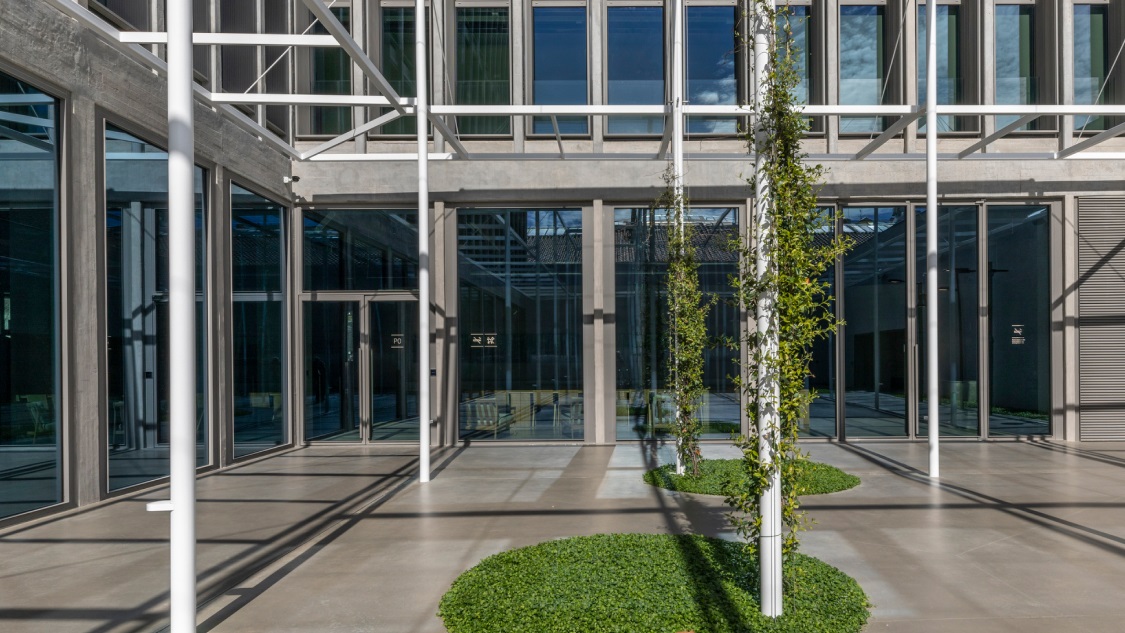
The courtyard, designed by Estudi Antoni Arola alongside Jordi Tamayo, brings light and vegetation — "essential in architecture and in cities." Alongside it sits the Mediterranean rooftop, with solar panels powering SWITCH, connected to the district heating and cooling network.
The use of smart technologies and bespoke solutions developed by Simon creates a human, pleasant, flexible and adaptive workplace, ready for the future.
Beyond the label: real impact and challenges
The European climate-neutrality horizon, which aspires to a "zero emissions" and regenerative architecture, is a major driver for the sector's green transition and circularity — and sustainable certifications contribute to both.
Beyond legal compliance or responding to the short-, medium- and long-term environmental challenges, certifications are a tool for continuous improvement and a real opportunity to decarbonise construction — set against greenwashing.

Holding a label is no guarantee in itself if there is no monitoring in place to measure, analyse and optimise daily environmental performance through the implementation of specific technologies and corrective measures.
Of course, the commitment of every agent involved and the role of the people who bring the building to life are decisive. Prioritising restoration and energy refurbishment, low-carbon materials, green leases, etc., and, of course, everyday acts such as adjusting thermostats, turning off the lights, avoiding standby, etc., are examples of good practice that amplify and give consistency to good architecture and to sustainable certification.
Written by Sònia Roura Valls.